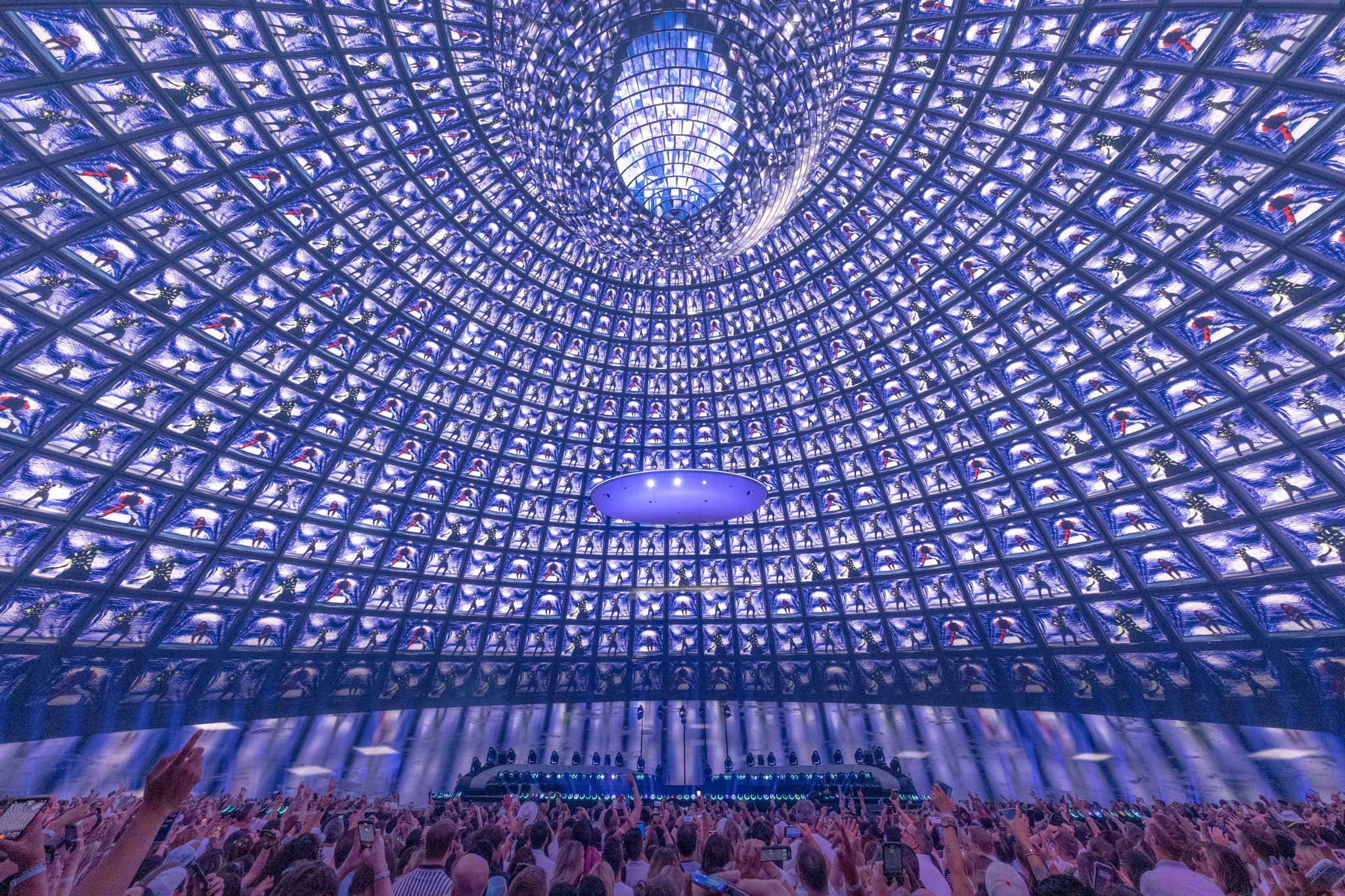
The Sphere in Las Vegas represents the pinnacle of immersive entertainment technology. With 160,000 square feet of programmable LED covering the interior dome, it's the world's largest and highest-resolution LED screen. Our role: ensuring content plays flawlessly across 16K resolution at 120 frames per second.
The Challenge
Traditional LED processing systems weren't designed for this scale. We needed to process and distribute content across thousands of LED panels while maintaining perfect synchronization and zero visible latency. The margin for error was zero—any frame drop or sync issue would be immediately visible to 18,000 audience members.
Our Approach
We designed a distributed processing architecture that breaks the dome into manageable zones, each handled by dedicated processing nodes. A master synchronization layer ensures every pixel updates in perfect lockstep. Redundant pathways mean any single point of failure switches over in under 8 milliseconds—imperceptible to the human eye.
Key Technical Decisions
Custom Protocol Development: Standard video protocols couldn't handle the bandwidth. We developed a proprietary distribution method that reduces latency while maintaining color accuracy across the entire 16K canvas.
Thermal Management: Processing 16K at 120fps generates significant heat. Our thermal modeling prevented any equipment failures during the 90+ show run.
Content Pipeline Optimization: We created tools that let artists preview content on accurate dome geometry before it ever touches the physical LEDs, saving weeks of on-site iteration.
Results
- 99.997% uptime across all performances
- Zero visible sync issues reported
- 8ms failover time on redundant systems
- 40% reduction in content iteration time
Looking Forward
The Sphere project has informed our approach to all large-scale LED installations. The principles of distributed processing, aggressive redundancy, and thermal-aware design now apply to touring productions at a fraction of the scale—but with the same commitment to reliability.